Who Were the Sea Peoples? Unravelling the Mystery of the Bronze Age Raiders
History is filled with enigmatic figures, but few are as shadowy and impactful as the Sea Peoples—a loose confederation of maritime raiders who emerged from the mists of prehistory to terrorize the ancient Mediterranean world aroun 1200 BCE.
These weren't your average pirates. The Sea Peoples came not just to plunder—but to topple civilizations.
A Storm from the Sea
At the end of the Bronze Age, the eastern Mediterranean was home to some of the world’s most powerful and sophisticated civilizations: the Egyptians, the Hittites, the Mycenaeans, and others. Then, almost overnight in historical terms, many of these cultures collapsed or significantly weakened.
One factor? A terrifying new force: the Sea Peoples.
They arrived by ship, striking coastal cities with a mix of speed and brutality. These raiders burned towns, dismantled trade networks, and seemed to have little interest in diplomacy or tribute. Wherever they went, ruin followed.
The Egyptian Clues
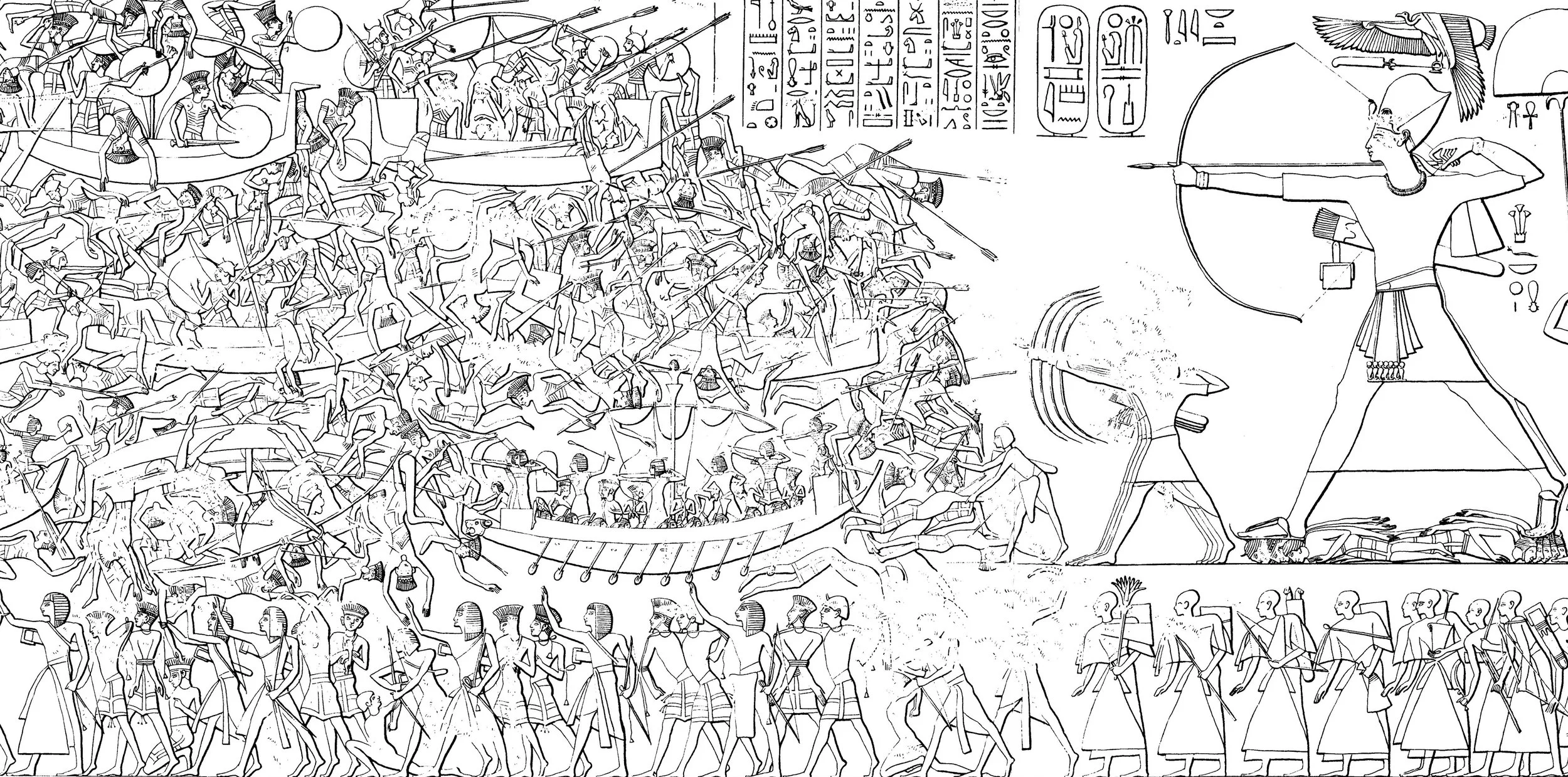
Much of what we know comes from the Egyptians, especially the inscriptions of Pharaoh Ramesses III, who claimed to have repelled an invasion around 1175 BCE.
On the walls of his mortuary temple at Medinet Habu, there are dramatic carvings of ships in battle and foreign warriors captured or slain.
Ramses names several groups, including:
Sherden
Lukka
Peleset
Ekwesh
Denyen
These are believed to be tribal or ethnic names of the Sea Peoples, but their precise origins remain speculative. Some scholars link them to regions in Anatolia, the Aegean, or even the Balkans. The Peleset, for example, are often associated with the Philistines of the biblical tradition.
Theories and Debates
The identity of the Sea Peoples is still hotly debated. Were they:
Displaced populations fleeing drought or famine?
Mercenaries turned rogue after their employers fell?
A migratory wave of Indo-European seafarers?
Or just a convenient scapegoat for widespread collapse?
What's clear is that they didn’t just raid—they often settled in the lands they attacked, integrating with local cultures and leaving traces in archaeology (like Philistine pottery in Canaan).
The Bronze Age Collapse
The Sea Peoples weren't acting alone. Their invasions coincided with:
Natural disasters
Economic instability
Internal rebellions
Technological shifts (like the rise of iron)
They may have been both a cause and a symptom of the so-called Bronze Age Collapse—a chain-reaction that ended centuries of interconnected prosperity and plunged the region into a "dark age" for several generations.
Legacy of the Sea Peoples
The Sea Peoples remain one of the most fascinating historical mysteries. They remind us that ancient history isn’t just about kings and empires—it’s also about the disruptive power of the sea, the unpredictability of migration, and the resilience of human societies in the face of upheaval.
They vanished as suddenly as they appeared, but the shockwaves they sent through the ancient world can still be felt in the ruins and records they left behind.